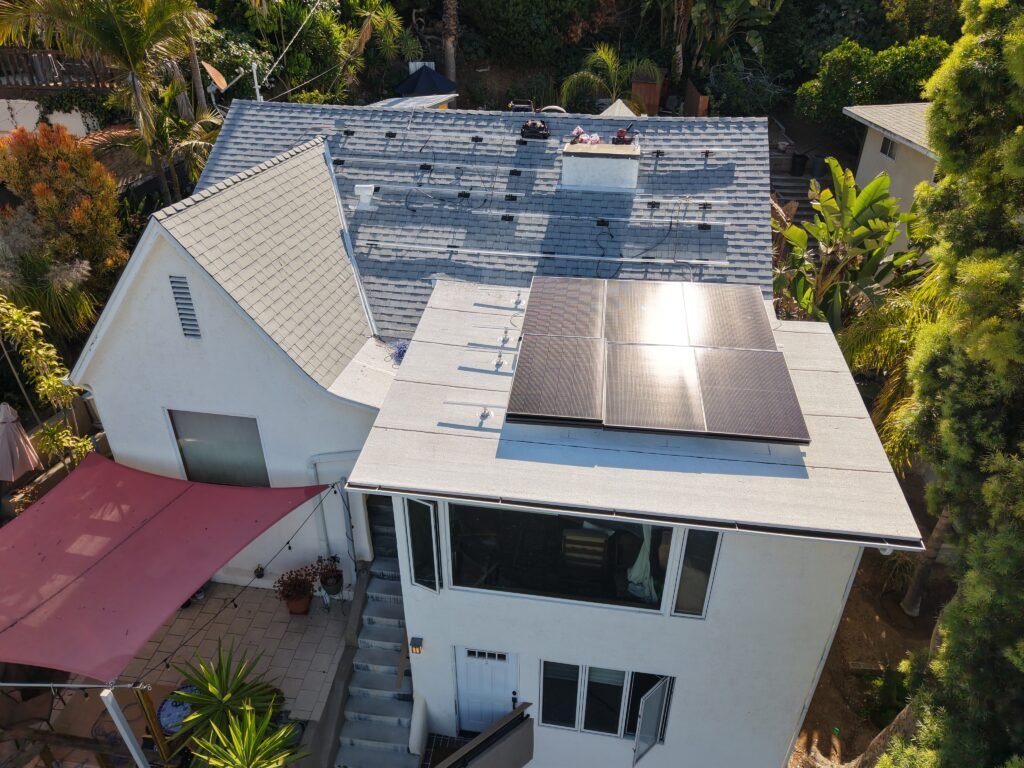
Integrated roof, solar, and battery systems for modern Los Angeles homes
Integrated roof, solar, and battery systems for modern Los Angeles homes
What Happens to My Solar Panels if I Need to Replace My Roof?
Date:06/09/2026
Category: Solar System
By: Yuvi Sasson
8 min read
One of the most common questions we hear from homeowners is:
“What happens to my solar panels if I need to replace my roof?”
The short answer is simple: the solar panels need to be removed before the roof can be replaced and then reinstalled once the new roof is completed.
If you’re like most homeowners, solar was a major investment. The thought of removing the system can sound stressful, especially if your roof has started leaking or reached the end of its life.
The good news is that replacing a roof with solar panels is a routine process when handled correctly.
At UV Roofing, we provide both roofing and solar services throughout Southern California. While most of our customers choose to replace their roof and install solar as one project, we also help homeowners who already have solar and need a roof replacement years later.
Unfortunately, no.
A proper roof replacement requires removing the existing roofing materials down to the roof deck. Depending on the condition of the roof, damaged wood may need to be replaced, new underlayment installed, and city inspections completed before the project can move forward.
Because the solar mounting system is attached directly to the roof structure, the panels and racking must be removed first.
If a contractor claims they can perform a complete roof replacement without removing the solar system, that should be considered a red flag.
In our experience, the most common reason is that the roof should have been replaced before the solar system was installed.
Solar panels are designed to last 25 years or more. Many roofs, however, may only have 5 to 10 years of useful life remaining when the solar system is installed.
Eventually, the roof reaches the end of its life and the homeowner must pay to remove and reinstall the solar system before the roof can be replaced.
As a general rule, if a roof has less than 10 years of useful life remaining, we strongly recommend replacing it before installing solar panels.
For homeowners considering solar, we discuss this topic in more detail in our article on Should You Replace Your Roof Before Installing Solar Panels?
One advantage of solar removal is that it allows us to inspect areas of the roof that haven’t been visible for years.
Some of the most common issues we find include:
Improper Roof Penetrations
This is one of the most common causes of leaks around solar systems.
Every solar installation requires roof penetrations for the mounting hardware. If those penetrations are not properly flashed and waterproofed, water can eventually find its way into the roof system.
Failed Sealants
Many installations rely heavily on roofing sealants around penetrations.
Over time, constant exposure to Southern California sun and weather causes sealants to crack, shrink, and deteriorate. Once this happens, leaks can develop.
Cracked Roof Tiles
On tile roofs, it is common to find cracked or broken tiles around solar mounting locations.
Sometimes the damage occurs during the original installation. Other times it develops over years of maintenance visits and foot traffic.
Worn Roofing Materials
We’ve also seen solar systems installed on roofs that were already near the end of their life.
In those situations, the roofing material often fails long before the solar system does.
Real project example: Richmond, California
A recent project in Richmond, California highlights why proper planning matters.
The homeowner had a 50-year-old concrete tile roof with a 15-panel solar system. Over time, leaks began developing around the solar area.
Unfortunately, the original solar installer was no longer in business.
After our inspection, we discovered water intrusion and roofing issues beneath the solar system. To properly fix the problem, we:
The solar removal and reinstall portion of the project cost approximately $5,500.
Once completed, the homeowner had a watertight roof and a fully functioning solar system without having to coordinate multiple contractors.
This situation is becoming more common.
Many homeowners assume the original installer must perform the solar removal and reinstall work. In reality, a qualified roofing and solar contractor can typically remove and reinstall an existing system even if the original company no longer operates.
We’ve helped homeowners in this exact situation, including the Richmond project above.
This is one of the reasons we recommend choosing a contractor that understands both roofing and solar systems.
For an average residential system of approximately 15 panels, solar removal and reinstall typically adds only 1 to 2 days to the roofing project.
Most residential roof replacements take approximately 3 days.
Adding solar removal and reinstall usually extends the project to about 4 to 5 days total, depending on the roof complexity, inspection schedules, and system size.
One of the first questions homeowners ask is about cost.
For most homes in Southern California, solar panel removal and reinstall costs typically range between:
$4,000 – $6,000
The final price depends on:
Larger systems and more complex roofs can increase costs.
This is one of the biggest reasons we recommend replacing an aging roof before installing solar whenever possible.
If you’re budgeting for a reroof project, you may also find our guide on How Much Does a Roof Replacement Cost in Los Angeles? helpful.
Without question, the biggest mistake we see is hiring separate roofing and solar companies.
At first, it sounds reasonable.
The problem comes when questions arise:
When two companies are involved, homeowners often find themselves stuck in the middle.
At UV Roofing, we offer both roofing and solar services under one company, which simplifies communication, scheduling, and warranty coverage.
Instead of coordinating multiple contractors, homeowners have a single point of contact from start to finish.
In our opinion, absolutely.
If your roof is nearing the end of its life, replacing it before installing solar is almost always the smarter financial decision.
It avoids future removal and reinstall costs, reduces the risk of leaks, and allows the roof to be designed with solar production in mind.
For example, during a reroof project we can often relocate vents and other roof penetrations away from prime solar areas, creating more usable space for solar panels.
You can also learn more about project timelines in our article on Average Time Required for a Typical Residential Solar Installation
If your roof needs to be replaced and you already have solar panels installed, don’t panic.
The process is straightforward when handled correctly.
The solar system is removed, the roof is replaced, inspections are completed, and the panels are reinstalled. For most homeowners, the process adds only a few days to the project and typically costs between $4,000 and $6,000.
Most importantly, work with a contractor who understands both roofing and solar. A properly coordinated project protects your roof, protects your solar investment, and helps prevent expensive problems down the road.
If you’re unsure about the condition of your roof or want to know whether solar removal and reinstall will be necessary, UV Roofing can help evaluate your options and develop the right solution for your home.