Integrated roof, solar, and battery systems for modern Los Angeles homes
Integrated roof, solar, and battery systems for modern Los Angeles homes
How Many Solar Panels Are Needed to Run a House in Los Angeles?
Date:03/16/2026
Category: Solar System
By: Yuvi Sasson
5 min read
One of the most common questions homeowners ask when thinking about solar is simple-
How many solar panels does it take to power a house?
The answer depends on a few key factors. The amount of electricity the home uses, the layout and size of the roof, and the efficiency of the solar panels all play an important role.
For many homes in Los Angeles, a typical solar system ends up using between 14 and 20 panels to offset most of the home’s electricity usage. Some homes may need fewer panels while others require more, depending on energy consumption and roof design.
Because Los Angeles receives strong sunlight throughout the year, solar panels can generate strong energy production even with moderately sized systems.
Every property is different, which is why solar systems are always designed specifically for the home rather than using a fixed number of panels.
The first step in designing a solar system is understanding how much electricity the home uses.
Most homes in Los Angeles consume somewhere between 7,000 and 10,000 kWh of electricity per year depending on air conditioning usage, electric vehicles, and the size of the household.
To produce that amount of electricity, a solar system usually needs to be around 5 to 8 kW in size.
With modern high efficiency panels producing around 400 to 430 watts per panel, that typically means installing approximately
• 14 panels for smaller homes
• 16 to 18 panels for average homes
• 20 or more panels for homes with higher electricity usage
This range covers the majority of residential solar installations across Southern California.
The available roof space plays a major role in solar system design.
Some roofs have large open areas that allow panels to be placed efficiently. Others may have vents, skylights, chimneys, or multiple roof angles that limit the available installation space.
In many cases homeowners also choose to replace their roof before installing solar to ensure the system is mounted on a structure designed to last decades.
You can learn more about that process on our solar roofing page.
Roof direction and sun exposure
Solar panels produce the most electricity when installed on south facing roofs. However east and west facing roofs can still generate strong production in Los Angeles because the region receives abundant sunlight throughout the year.
Shading from trees, nearby buildings, or roof structures can also affect how a system is designed.
A proper solar layout takes these factors into account to maximize energy production.
Panel efficiency
Not all solar panels produce the same amount of electricity.
Higher efficiency panels generate more power from the same amount of roof space. This is helpful for homes where the available roof area is limited.
Many modern installations use panels rated between 400 and 430 watts, which allows solar systems to remain compact while still generating strong energy output.
If you are considering installing solar on your home you can learn more about the process on our solar installation page
A real example from a local project
On a recent project, the homeowner wanted to offset most of their electricity usage while preparing for potential future upgrades.
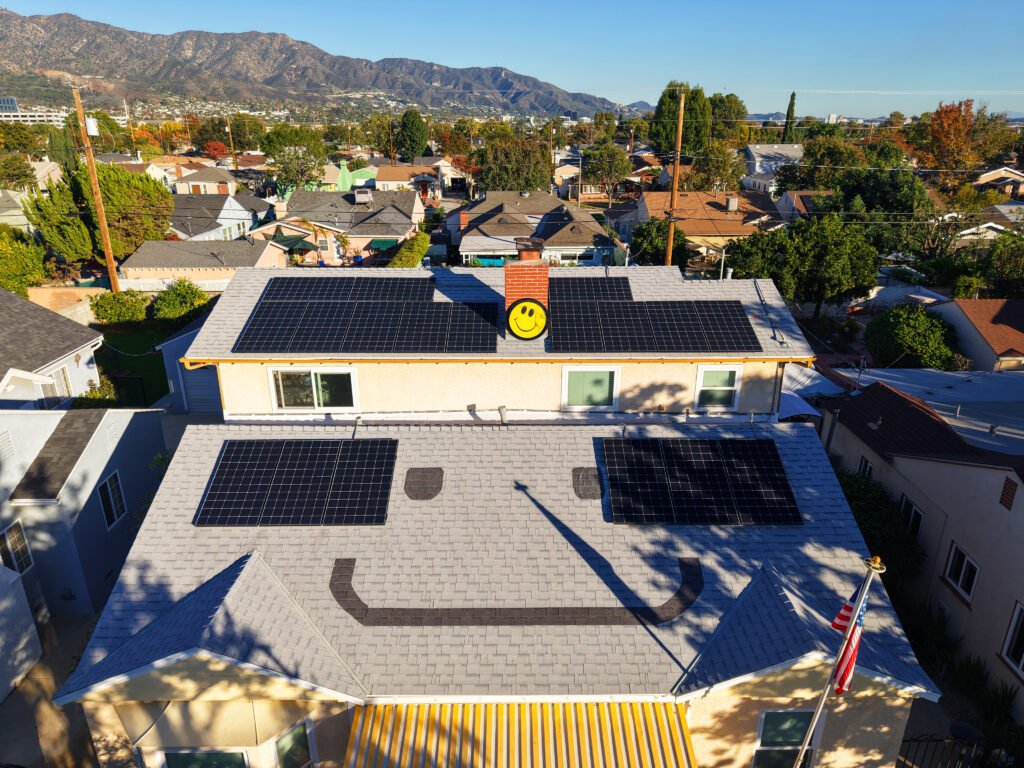
Their home used approximately 8,500 kWh per year. After evaluating the roof layout and sun exposure, we designed a 5.2kW solar system using 12 high-efficiency panels.
Because the panels had higher output ratings, the system was able to produce significant energy while keeping the installation compact.
Every home is different, which is why solar systems are always designed individually rather than using a standard system size.
Some homeowners choose to install a slightly larger system than their current electricity usage requires.
This can make sense if you plan to add new electrical loads in the future, such as
• purchasing an electric vehicle
• installing electric appliances
• adding battery storage for backup power
Planning ahead can make it easier to support future energy needs without expanding the system later.
While general averages can provide a rough estimate, the most accurate way to determine the right solar system size is by reviewing
• recent electric bills
• roof layout and available installation space
• sun exposure and shading
• potential future electricity usage
A proper solar design takes all of these factors into account to create a system that performs efficiently for many years.
For most homes in Los Angeles, a solar system typically requires between 14 and 20 solar panels. However the exact number depends on the home’s electricity usage and the layout of the roof.
A well designed system balances energy production, roof space, and long-term performance so homeowners can maximize both savings and reliability.
If you are considering solar for your home, evaluating your roof and electricity usage is the first step in determining the right system size.
If you are considering solar for your home, you can also read our guide on How long a roof lasts in Southern California.
Every home is different, which is why the most accurate way to determine the right number of solar panels is by reviewing your electric bills, roof layout, and sun exposure.
If you are considering installing solar panels in Los Angeles, our team can evaluate your roof and energy usage to design a system that fits your home.